Art

A prolegomenon to a new managerial phenomenology

Preface

The concept of “hypocritical behaviour” is closely associated with a particular profile: the manager.

The term “manager” can be confusing. Everyone manages something—objects, tasks, people—whether consciously or not. However, in the workplace, “manager” takes on a critical significance. This role encompasses a variety of dynamics, especially those involving human interactions. The office serves as the stage for these interactions.

Managing is a complex task, especially when it involves both people and projects, two distinct domains with numerous variables. “Hypocritical behaviour” often emerges as a response to the challenges of managing these domains, reflecting an inability to excel in both. This behaviour is particularly detrimental when it arises from confusion between treating people as objects and recognizing them as conscious beings. The “weak agent” (the hypocritical manager) develops psychological distress that affects job performance and public perception.

In this introduction to the “new managerial phenomenology,” I examine the first signs of this distress—a phenomenon that signals the breakdown of a healthy work environment and workforce.

This is a philosophical article. It may offend some or be seen as gossip, but it is not intended to teach. Rather, it is a tool for reflecting on a situation everyone encounters: management and work-life. It transcends business, marketing, and the standardized advice pervasive on social media. This is a painting, framed by both happiness and sorrow.

1. The Hypocritical Person as the Agent of Social Malaise

In the professional world, hypocritical attitudes lead to self-destructive responses that psychologically annihilate the hypocrite. The consequences are devastating for both the perpetrator and the recipient of falsehood. Ultimately, both individuals may end their careers in anguish and frustration.

1.1 The Hypocritical Leader

Hypocrisy is not merely falsehood; it is a defensive stance of a weak individual. Here, I consider two main manifestations:

  1. Falsehood: Propagating trivialities to facilitate the management of individuals.
  2. Malice: A destructive dynamic where a weak ego seeks to assert superiority to legitimize an illusory competence.

The second, more self-righteous form is common and indicates a deeper personality disorder, often manifesting as:

  • Loquacity: An involuntary propensity for disjointed and rapid dialogue.
  • Exhibitionism: Intellectual exhibitionism in the workplace often signifies insecurity. This involves a desire to be the canter of attention, engage in numerous meetings, and waste resources (time and money) to display intellectual superiority (gnoseological egocentrism) and self-mastery.

The hypocrite seeks comfort and help but paradoxically annihilates others in the process, a fallacious metaphysical transfer of personality. To counter this, others must maintain control, calm, and empathy, and engage in dialogue outside the workplace. Supervisory audits and Human Resources interventions are essential. Feedback is crucial; its absence can turn the problem chronic, damaging the entire work environment.

Real-World Example

Consider a manager, X, who frequently promises support to her team but rarely delivers. X uses kind words and makes grand gestures in meetings, but when the time comes to act, X is absent. X team begins to lose trust, feeling betrayed and unsupported. X’s behaviour creates a toxic work environment, leading to high turnover and low morale.

1.2 The Hypocritical Individual as an Agent of Social and Individual Success

A positive mindset benefits everyone, and a successful mindset uniquely discloses phenomenological aspects. Every interpersonal connection is driven by the energy of the minds involved. These forces, rather than annihilating, support each other’s development: thanks to the other, I exist.

A workforce comprises various existences, and the workplace is where these existences evolve. A manager is someone empowered by others to “manage” these existences.

Real-World Example

Imagine Y, a manager who genuinely cares about his team’s well-being. Y takes the time to understand their personal and professional goals, offering support and resources to help them succeed. Y authentic approach fosters a positive and productive work environment, leading to high employee satisfaction and loyalty.

2. Game – Stages, Mind – Set, Match – Aetiology of a Failure

A positive mindset benefits everyone. However, understanding its unique phenomenological disclosure in interpersonal connections is crucial. Forces between individuals create harmony, aiding mutual development: thanks to the other, I exist.

2.1 The Chemical Wedding of the Manager and the Team Member

A workforce is an agglomeration of existences. A workspace is where these existences evolve. Managers inspire team members, although team members often inspire managers, which is rarely acknowledged.

When managers inspire team members, they connect through words, signs, and gazes. Despite our natural inclinations towards malice, spite, and envy, the workplace often mirrors success and distress. Unfortunately, the latter is more common, particularly between managers and subordinates.

2.2 Training or the Guillotine Pendulum

Corporate training often fails to extend beyond the classroom. Sharing training accomplishments becomes an exercise in self-satisfaction for the weak manager, who seeks outer recognition due to inner deficiencies. This approach is unproductive and fails to inspire or develop people.

Real-World Example

A company invests heavily in leadership training programs, but the managers attending these programs fail to apply what they learn. Instead, they boast about their certificates without implementing meaningful changes. This superficial engagement with training undermines its potential benefits, leading to stagnation and dissatisfaction among employees.

2.3 Inspiring by Delivering

Post-training, the goal is to inspire. True management aims to let individuals flourish. Despite being overwhelmed by numbers and trends, the manager should remember that they are managing conscious beings with needs. Two main methods can facilitate this awakening:

  1. Silence: When consciences are linked, words become redundant. Strong connections begin with silent gazes, allowing others to speak through silence.
  2. Free Association: Inspired by Socrates, free association involves allowing others to speak freely without apparent reason. Interpreting these associations distinguishes a project manager from a people manager.

Real-World Example

A manager, Z, decides to implement a new approach after attending a training program. Z begins by creating spaces for silent reflection during meetings and encourages Z team to share thoughts without structured agendas. This shift fosters deeper connections and innovative ideas, transforming the team’s dynamic and productivity.

2.4 Project Machina vs. Desiring Machine – The Final Match

Managers and employees often confuse roles and responsibilities. Clarifying the distinction between two manager types—Project Machina and Desiring Machine—is essential.

2.5 Project vs. Anima

Project Machina: This manager handles tasks and systems but not souls. Anima refers to the mind and unconscious emotions. Managing Anima involves dealing with a dynamic, reactive system that challenges the manager’s own anima.

Desiring Machine: Managing a soul is a mission with no easy return. Sciences attempt to systematize human desires and forces but often fail. Each individual is unique and cannot be standardized.

Real-World Example

A, a Project Machina, excels at organizing workflows and meeting deadlines but struggles with team morale. In contrast, B, a Desiring Machine, focuses on understanding and motivating each team member, creating a more engaged and resilient workforce.

2.6 The Pitfalls

Forcing positivity masks negative feelings, leading to anxiety and despair. This is evident in corporate environments where positivity is prized. Initially, individuals believe everything is fine, but eventually, anxiety and stress surface.

The Delusional Knight

This individual seems unaffected by general hypocrisy due to a well-managed mindset formed in the same environment, passively accepting reality.

The Disillusioned One and the Sad Ending

The disillusioned individual, aware of the truth behind the facade, sees through lies. Making people happy becomes a strategy, not a genuine effort. Awareness of this reality leads to anxiety and stress, impacting performance and behaviour. Despite maintaining professionalism, the individual becomes critical, clashing with the hypocritical managers and the system that shaped them.

Coaching is often touted as a solution but can feel like a superficial fix, akin to a child being spanked back into compliance. True healing and happiness require more profound change.

Real-World Example

Consider L, a disillusioned employee who starts noticing the discrepancies between the company’s positive facade and the underlying toxic culture. Her critical perspective and refusal to conform lead to clashes with management, ultimately causing her to leave the company in search of a more authentic work environment.


Finale

Towards Authentic Management

In exploring the complexities of hypocritical behaviour in management, we’ve seen how such behaviour can undermine the very essence of leadership and human connection within the workplace. Hypocrisy not only breeds distrust and demoralization but also stifles genuine growth and collaboration.

The antidote lies in fostering authenticity and empathy. Authentic management acknowledges the human element in every interaction and prioritizes genuine connections over superficial displays of competence. Here are a few guiding principles for moving towards authentic management:

  1. Embrace Vulnerability: Authentic leaders are not afraid to show their weaknesses and learn from their mistakes. This vulnerability fosters trust and encourages team members to do the same.
  2. Prioritize Empathy: Understanding and addressing the emotional and psychological needs of team members creates a supportive environment where individuals can thrive.
  3. Promote Open Communication: Encourage honest and open dialogue. Feedback should be seen as a valuable tool for growth, not a threat to authority.
  4. Lead by Example: Demonstrate the values and behaviours you wish to see in your team. Authentic leadership is about embodying integrity, respect, and commitment to the team’s collective goals.
  5. Focus on Development: Invest in the personal and professional development of your team members. Their growth is a reflection of your success as a leader.
  6. Celebrate Diversity: Recognize and value the unique contributions of each team member. Diversity of thought and experience enhances creativity and problem-solving.

Real-World Example: A Path to Authentic Leadership

Imagine a company where the CEO, M, leads by example. M openly shares her journey, including her failures and lessons learned. She regularly checks in with her team, not just about work, but about their well-being. M implements policies that promote work-life balance, ensuring that employees feel valued and respected.

M’s approach transforms the company culture. Employees feel safe to express their ideas and concerns. They are motivated and engaged, knowing that their leader genuinely cares about them. The company’s performance improves, not just in terms of profits, but also in employee satisfaction and retention.

Final Thoughts

The journey towards authentic management is not without challenges. It requires a commitment to continuous self-improvement and a willingness to confront uncomfortable truths. However, the rewards are immense. By fostering a culture of authenticity, empathy, and respect, managers can create a work environment where individuals feel valued, inspired, and empowered to achieve their best.

Let us move away from the shadows of hypocrisy and towards a future where management is synonymous with genuine leadership and human connection. This is not merely an idealistic vision but a practical pathway to sustainable success and fulfilment in the workplace.

Standard
Art, Filosofia, Philosophy, Psicologia, Psychology

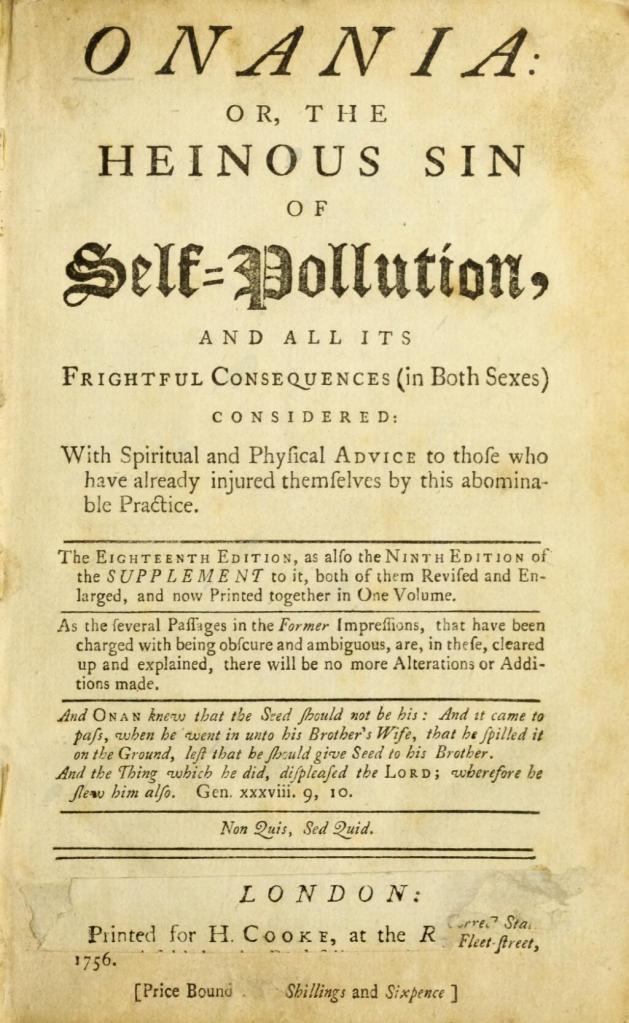
Mas-turbation VS Coit-uS

Even in a century when there aren’t enough restrictions, where the adored super-io appears to be turning into a mere puppet in the hands-on ignorance, there are things that are kept secret.

The idea of masturbation as a substitute for sex, and specifically the function of the (sex) toy as a substitute for human presence, is one of the subjects I wish to cover in this essay.

Most people define sexuality as desire, and this is simply understood as coitus.
In reality, sexuality merely refers to a concept.
When we talk about “sex,” we relate to a story that spans generations and involves scientists and medical professionals standardizing humankind’s perception of pleasure.

To put it simply, desire is you.

Generalizing a little, people obtain pleasure by projecting desire through and through bodies, but they also experience desire through mutual manipulation, stimulation, and, in rare instances, euphoric multi-senses connections with other people.

Even the most intense sensory experience is turned to an object in the capitalistic interpretation of desire.
This circumstance played a role in muddying the idea of masturbation as an alternative to coitus.

Coming back to our days, it is interesting how the sex toy is taking over the mere body presence of the others. The strongest pleasure experienced during toy masturbation (because of the high technology behind the sex item) is obscuring the need for the presence.
It is well known that people used a variety of mechanisms, circumstances, and even toys to enjoy their pleasure in earlier centuries. However, eroticism, also known as “masturbation,” was not merely a result of pleasure or a sublimation of the wild instinct for copulation; rather, it was an experience without boundaries or associated psychosis.

What do we lack in this case?

No miss exists. This is the reality of today, created by non-presence connections and high-tech sensory experiences that are constantly getting closer to the real world.
Maybe there is only one thing we are sorely missing: the consciousness or “self.”
It makes no difference if you use a body-attached vagina, a penis, or a plastic toy.
Even those could simply be a “toy.”
The understanding of who we are as beings is what is missing.
We can perceive the selves of others in complete harmony if the self is completely aware of itself in space and time.

Self-awareness and the multi-senses experience are closely related.

Consider the following scenario: a woman/man purchases a toy capable of not just stimulating the vagina-clitoris-penis but also “simulating” in ways never before experienced (humans to humans).
The senses, warm feelings, natural smoothness, scent, taste, and “mutual agreements” are all lacking.
Yes, when two or more selves come together, they can form their own experience.

Technology emerges in the absence of conscience.
Masturbation is the sublimation of coitus in the absence of self-consciousness not multi-sensory-self-referential-experience.

It is clear that self-gratification by an external “being that is not self” (ontological difference?) is not reducible to a simple pleasure, but rather to a variety of dynamics embedded in our cultural order.
This so-called object is the new expression of perfection.
As a result, the human body is turned into a commodity, commodifying itself for the sake of the moment.
At that very time, the Self is fulfilled by the deep breath, the heart rate, and the veracious flux of dopamine.

Neither the object nor the act (known as masturbation) can replace the coitus.
Perhaps what “we” experienced was genuine love that we couldn’t find with others.

There is no connection between self-pleasure and shared-feral-titillating coitus.
The two experiences are two distinct realms that should not be combined or undervalued in comparison to the sacred-that-isn’t coitus.

Finally, the plastic toy cannot replace human flesh, just as self-hypnotic-titillation cannot substitute human genital exercise.
The joyful experience is a one-of-a-kind way to become aware of oneself and the world around us.

For further elucubrations:


Standard
Art, Filosofia, Philosophy

Ex-pulsion, or the lightness of the soul

Refraining from doing something is a great act of courage; the tendency towards doing something, means being aware of an instinct, almost out of control, that lead us to act in a certain way; The most famous is the sexual one, a voluptuous drive that reminds us our natural-nature. Despite our effort to hide our origin, mostly with old and anachronistic gimmicks, our natural nature is that and still celebrated with shameless pleasure.

Coming back to our act of denying: is that difficult to refrain ourselves to act impulsively? The answer is yes. Beyond the great “courage” it needs a self-restain over the average, a well-ignored self-consciousness.

The fact that we lack formal education on this subject and that the same educators lack knowledge leaves us with only the outdated idea that attempts to connect the sexual instinct to “love” (kiss-coitus-kids-family), in which the outcome (or product? – the child?) is frequently an unintentional thing or being.

What does it mean to avoid a pulsion?
Anguish (?) Tedium (?) Painful somatic implications, partially generated by psychic dynamics. The first step in detoxification is to refrain from a daily action caused by a pulsion. This (long) procedure is comparable to the detoxification from psychotropic drugs in that it takes time and is the first destructive act. Fortunately, the subsequent steps are less traumatic and the initial one is almost exclusive.

Being (us) alive is crucial because, in a drive conflict, the balance (human control of the instinct – the trigger for such activities) is essential. Breaking away from a habit (vice) related to an instinct is crucial.

What transpires when there is a pulsational balance or imbalance? (Let’s replace impulsiveness with lust because the most basic instincts are associated with voluptuousness.)

Balance:
The being reveals itself fully, awake, cunning, and infinitely present in its presence. The harmony that results from the balance encompasses the entire body, including the soul and psyche (slave of both dimensions, never a master).
And it is precisely through this dialectic dynamic of opposites that a pulsion transforms into a life-mine, providing the body’s engine, its neuronal activities, and spiritual vitality.

Imbalance:
When the balance stops, the soul falls in the whole black: the body becomes the object of involuntary spasms, unconscious as a carrier agent of noetic activities of ontological destruction. The human loses control of its frail existence in this last-ditch effort, becoming the prey of instinct and a mere object in the hands of the unconscious.
Psyche: of which neuronal energy becomes atomic, uncontrolled, explosive. Mind: now disconnected from the entire human and absorbed in its unrestrained games, where the feeling of the objects around it (and with it, the time/space idea itself) no longer has any meaning


It may also go by the names panic, anxiety, or agony. It lasts a brief instant or years. Finally, the long-awaited satisfaction is attained. What we have always desired has now evolved into our most despised belief, which has caused displeasure and misery.

Standard
Art, Filosofia, Philosophy, Psychology

Love beyond the mere concept of affection. Brief rumination on the concept of desire – Feat. E. Schiele

Premise

Desire is the key concept of this article, so, no apologies for the repetition!

Meditation I – Sturm und Drang

I

The fact that I am here, right now, and the object that is my body, are two things that mysteriously stand out in every representation of the (my/ours) reality.
I’ve always thought that my presence in the cosmos is just a fact that I’m aware of., and that my relation to others—or, better, to objects—is wholly subjective.

During those ruminations, I used to connect the dots between my existence and the pasts of other beings in outer space who weren’t me, perceiving the present that belonged to me and sensing the present that belonged to my conscience. In those moments, I came to acknowledge the fact that I was a living being—a melancholy object—and that I was nevertheless alive.
Two distinct experiences between things and beings. Every encounter with those beings is solely motivated by misery and despair. Being among objects was a constant source of conflict, a struggle for reproduction, whereas being among beings was a symbol of simple mortality, here and now, the icy touch of the pure non-being.

Desire – the lonely sing of the desperation

I

(for not using the pronoun “us”) desire due to an innate need for reproduction. I had always assumed that desiring was merely a trait unique to humans, but after the experiences that followed, I understood that I was just a mammal.
The idea of love serves to tame the wild, unbridled yearning.
At the same time, I’ve discovered that love is an intriguing experience since it reveals both our human nature and our remote connection to wild nature.


Humans are capable of abstract thought and concept creation, so we invented the idea of love to stifle our irrational need. The sincere desire to help and assist one another, which is typical of many species on this planet, is also represented by love. As a result, we share this wonderful idea with all living things.
By referring specifically to this succinct justification, I acknowledge that my origin and the struggle are essentially mine as a human being.

The paranoid impulse

W

e have seen how desire and love are not completely compatible. We desire because of instinct, not because of love. Any attractions to the other individuals are what I consider as desire.
Our lives are largely driven by our desires. Every interaction we have is subconsciously influenced by the primal filthy desire. This is merely a thought about the essence of our being, not a pessimistic view of life or the world. Humans have the capacity to experience suffering without becoming affected by it, yet we are aware that we are caught in the instinctive black circle even beneath the heavy conscience.


I won’t write much more about it; instead, I’ll just allow you some time and space to consider your current circumstances in relation to those of your fellow humans and other living things.

The paramount conflict

In every connection/relationship we can see a latent conflict. I don’t mean that our lives are based on conflict because we live among people, but since we are part of nature, the answer is obvious, implicit.
How can we get out of this situation? Of course, for many people, that is not an issue; their lives are filled with love and happiness; but what about your inner being? How can we become actual humans in the face of our wild impulses and habits? Nature, instinct, and untamed habits are not inherently bad; rather, they are obstacles to the happiness of certain individuals who are unable to overcome that fundamental and embedded dimension.

By mastering our instincts, we can become successful and fulfilled owners of ourselves.
This is/was merely a meditative exercise. The solution is to go out and figure it out for yourself.

Postface

I was still blind, but twinkling stars did dance Throughout my being’s limitless expanse, Nothing had yet drawn close, only at distant stages I found myself, a mere suggestion sensed in past and future ages.
Novalis

Standard
Art, Filosofia, Philosophy, poetry, prose, Psicologia, Psychology

II. Panicnoia – Feat. A. Bloch

The sun heats my skin, yet my illuminated head spins quickly.
I’d want to see the moon against the gloomy backdrop of my dreams. There were no starts, only the moon, high in the sky, alone and lonely.

I try to walk, but my feet are stuck in place. I am not moving. is there a movement within me?
Blood, heartbeats and thoughts. My tongue is tingling, my mouth is dry and my mind is racing.

I can feel parts of my body pounding like volcanoes covered up and ready to explode

D E S O L A T I O N 

Nobody inside, my soul is speaking to me. What exactly am I? Yes, I am gazing at myself right now. I am touching these hands and arms, but I am not feeling myself.
Great boulders, I raise my arms, yet my hands are empty

D E L I R I U M

Every step forward, one idea returns to the beginning.
I want to be little, heedless of myself and the world around me.
I see myself in everything, and everyone is staring at me as I stumble aimlessly

Where am I?

All those faces, all those eyes staring at me… I am an insect paralyzed on a glue-covered floor.

That’s funny, it is the end.

P A N I C N O I A

Standard
Art

Borderartline or the two Freud.

A broken Incest

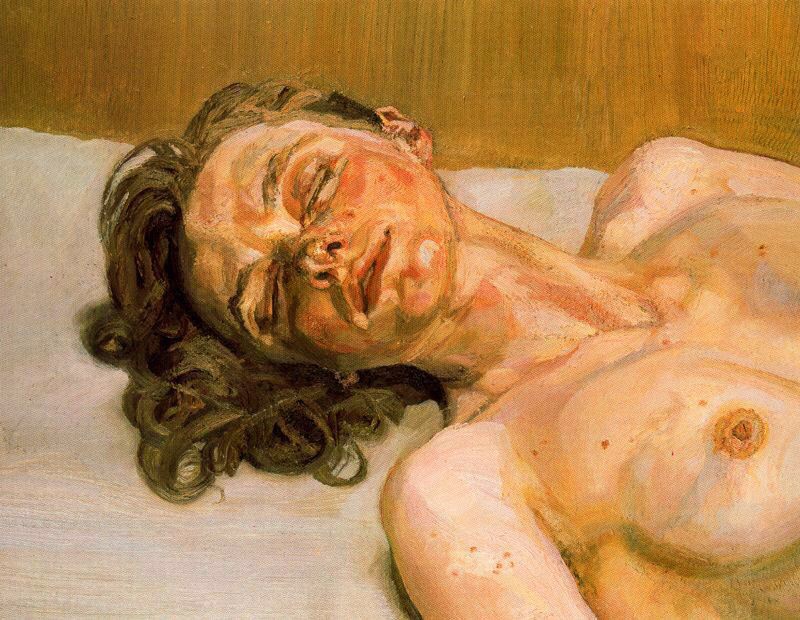
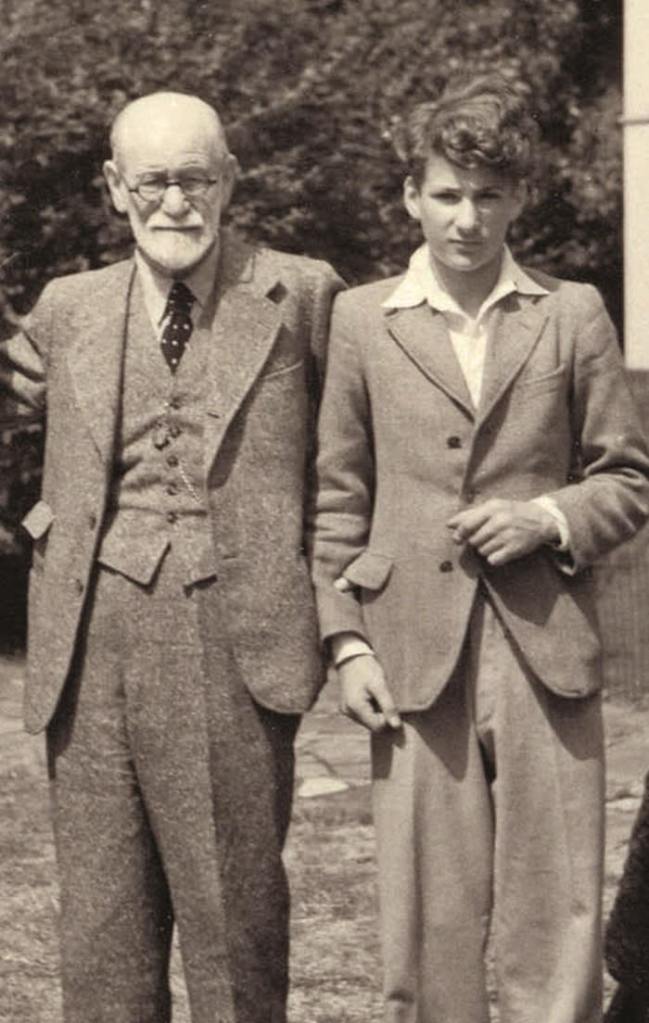
The one who was able to understand the human soul was Freud, the man of the true desires, of the unwavering impulses. Not a spooky, unstable man (his grandfather, the neurologist) who was shamelessly servile to bourgeois power, but a straightforward master, a modest intellectual who appealed to the masses by mostly showing naked people.

In his intense sensuality and reality, Lucian is violent; in his honesty and boldness, he is pornographic; and in his upbeat exaltation of life through the terrible message of the static-natural-raw body, he is prurient. The primary science of the spirits is art, in which power and cruelty are subtracted from human knowledge. Where the synthesis is the art, Freud represents the polar opposite of his namesake and is essentially unknown to Dr. S.

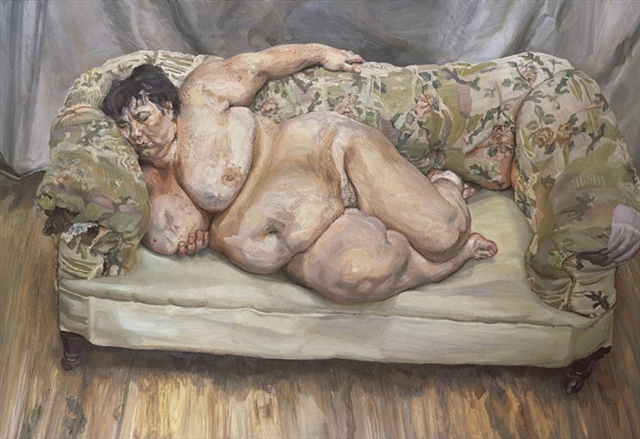
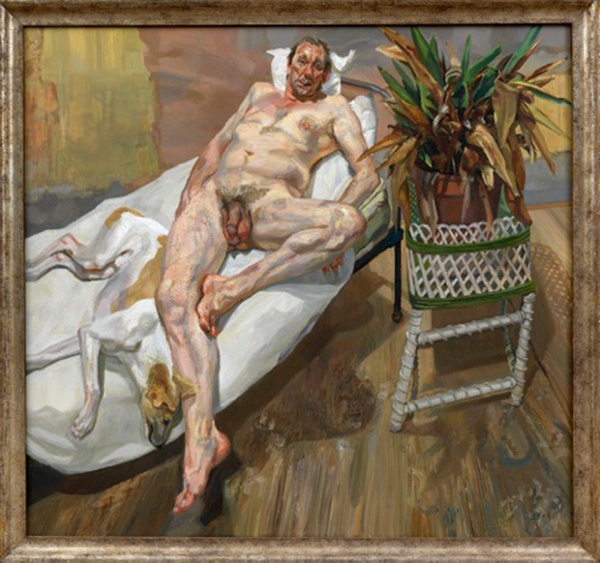
Benefits Supervisor Sleeping is, 1995, oil on canvas 

Die Tiere, die wir sind

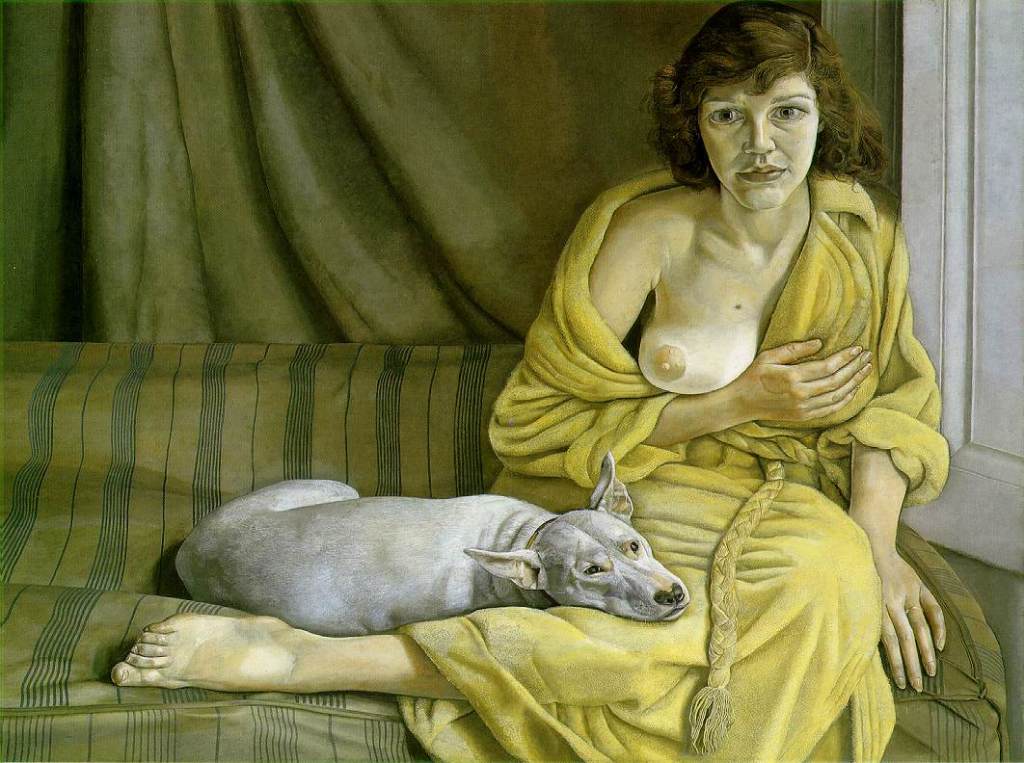
The relationship between people and animals is essential in Freud’s painting. It is simple to feel the nature of the flesh, the fragrance of the body, and its sex moisture by gazing at his portraits. The only plausible and possible method of human comprehension is through Freud’s interest in considering people like animals.

In “David and Eli,” this bond is strong. Mother Nature has established a bond of love and profound connection between the two. Both nude, free, and at peace, living in the present entirely calm; free of the crowds’ angry hypocrisy and profound malice.

In “Girl with a White Dog,” the lady’s sensuality, nearly pure, humiliated, like a nun unveiled, matches her friend’s drowsy softness, lying down on her legs. This is the unity we like, the one Lucian envisioned.


The Two Freud – A Reconciliation?

I don’t perceive any relationship between S. and L. Freud. Even the stances of his models do not convey the impression of a psychoanalytic session to me. The sitters on such sofas are not judged, but they are allowed to communicate their profound thoughts and wishes for their own reasons. His grandfather’s conscious or unconscious impact is purely negative, a subconscious desire and urge to oppose the culture of suppression and mental manipulation.

Ultimately, the true meaning of his artwork is concealed in his mind-heart, and it is now resting eternally in a better place, where the art is unspoiled. What matters is what you see whenever you watch his works and how you feel while you contemplate these masterpieces.
It is a type of psychoanalytic process in which the psychoanalyst is the viewer himself, the only one capable of retrieving its suffocated desires, blockers, and dreams suffocated under a thousand lies and coercion; not being led into the obscure unconscious dynamics by an external source, but thanks to the natural force that moves life itself.
I’m not meant to tell you what this energy is; you probably know, feel it, or you have never pondered it. It’s time to delve within yourself, ideally at a museum with your-our past.


“I prefer the company of animals more than the company of humans. Certainly, a wild animal is cruel. But to be merciless is the privilege of civilized humans.”

Sigmund Freud
The Two Freud
Standard
Art

The “now” unfolded #Anguish in becoming#

Never confuse the present with presence. We believed we were holding it in our grasp when we suddenly lost it. It’s slimy and cryptic. It is in our tendency to assume that living in the present is a certain thing, but it isn’t: when you say the word “now,” it is already gone, gone in the same way that the word “gone” is gone. Perhaps life follows the gone-departure, leaving the moment to eternity. Our present is mainly composed of our memories, which are stored in our soul, organized by the spirits, and summoned by God whenever they’re needed. Merely thinking about memories allows us to relive the past, which is no longer present.

After centuries of defeats and failures, we still believe we are unbeatable. The “we” that refused its nature, who denied the thought of being born in a filthy cradle and, eventually, filled of regrets, the ES which lost its track wanders in the never-ending nothing.

It has the ability to raise during its bleak existence. This power is not granted to everyone, but only to those who can grasp it. Everyone could catch it, although not everyone is capable of doing so. God bestowed free will upon us. Nothing exists apart from the mass; to it are due all the powers of which God is the ultimate expression. Instead, the “primitive” aspect of humanity is depicted by the mass.

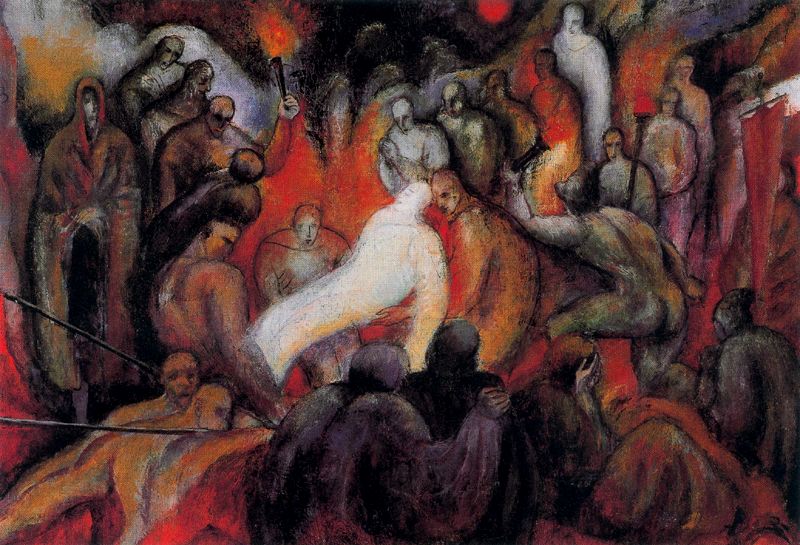
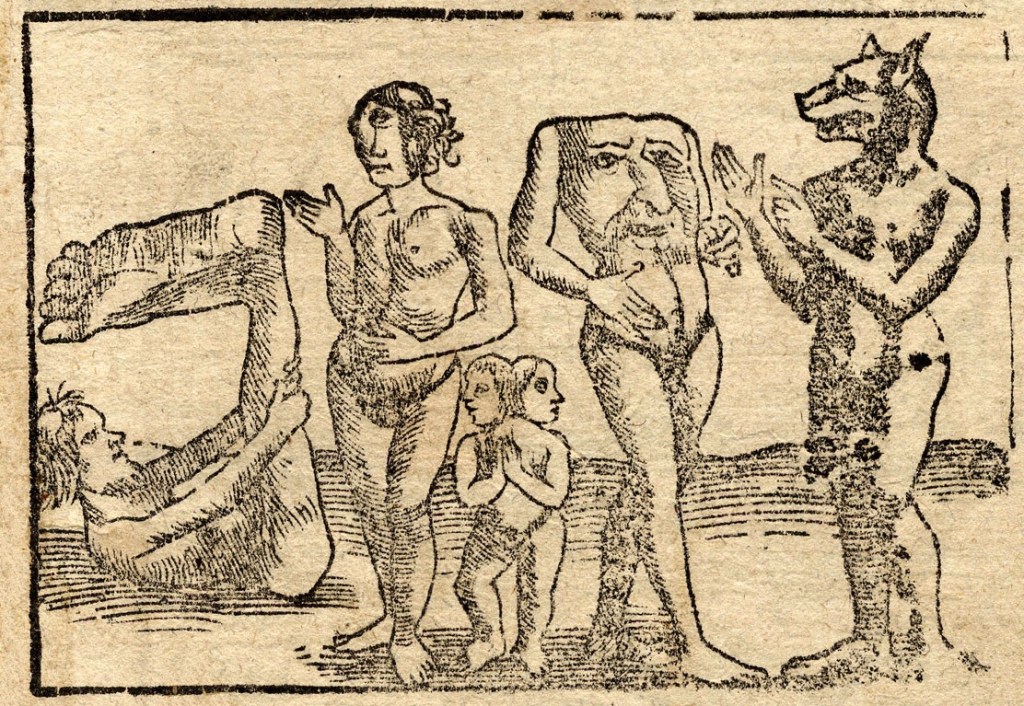
Sebastian Münster, (1544)

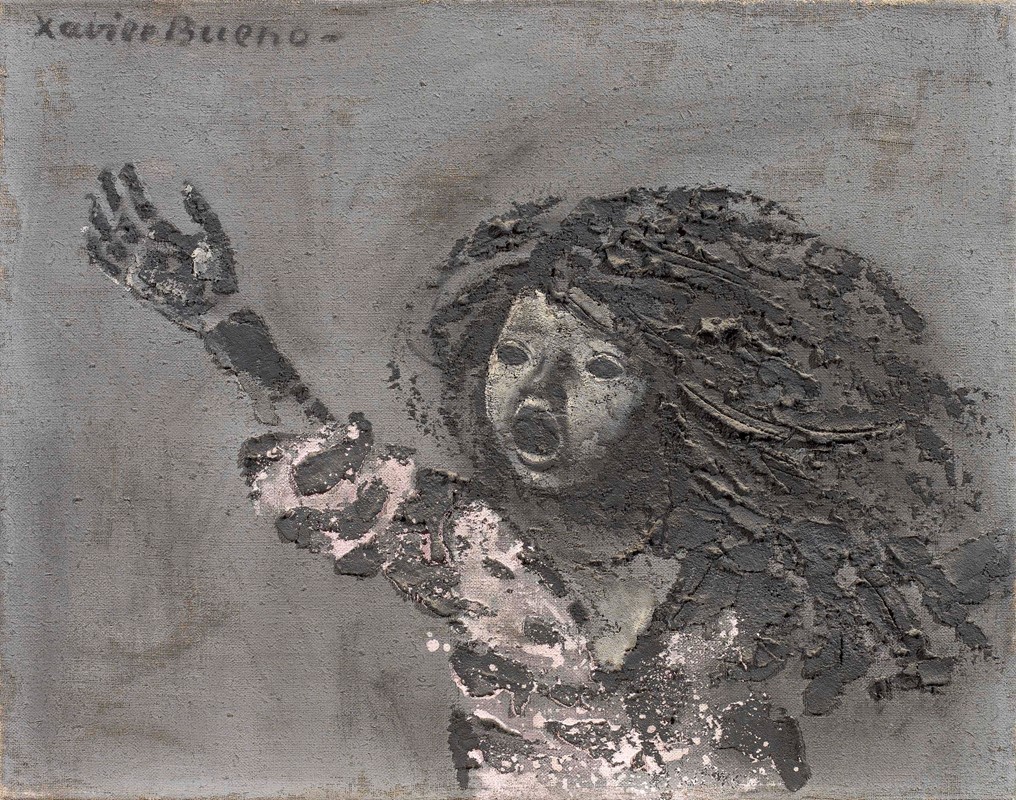
The word is confusion. Dizziness and giddiness, as well as dizzy spells. These disorders provide the primary insight into this gloomy state of loneliness among the throng, where each indicates a distinctive quality:

  1. Dizziness: IT grasps the concept, experiences its existence in the present, and realizes it has entered the world of spirits. The head begins to whirl around and sinks deep into space, into its consciousness. Pain and anguish force IT to become aware of itself.
Xavier Bueno, 1965

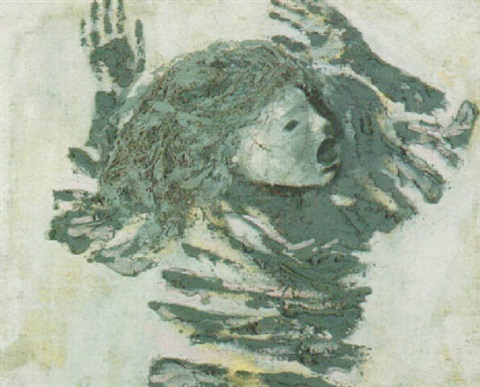
Giddiness: ITS heart suddenly begins to beat quicker, implying that everything is fine, despite the fact that something behind the consciousness is working hard to destabilize the reality inside and around IT. There are no alternatives: IT is alone, and by enduring IT experiments its place in the world (society). The metaphysical presence of IT among the many is utterly devastating: the spiritual essence of the few is lost in the midst of nothingness.

Xavier Bueno

3. Nausea?

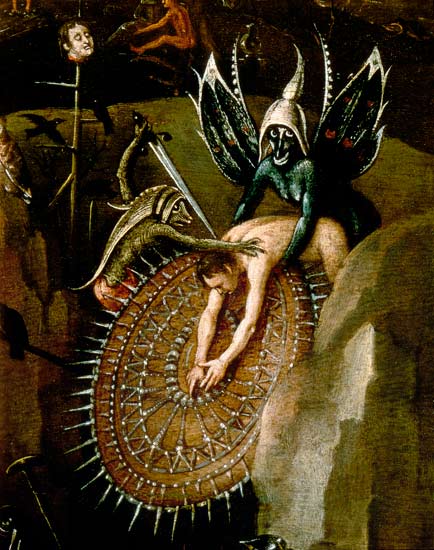
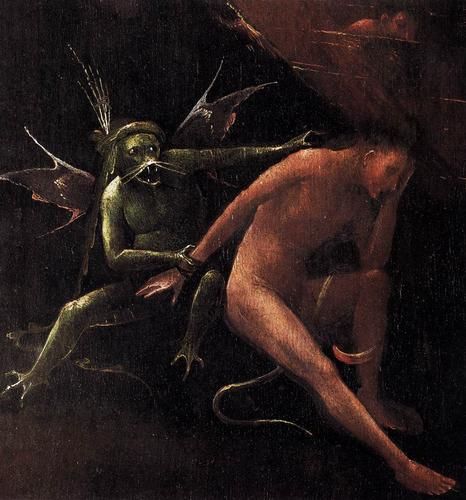
The unfolding of pain awakens the presence of the present.

Hieronymus Bosch
Standard
Art

Rubens… Sacher-Masoch?

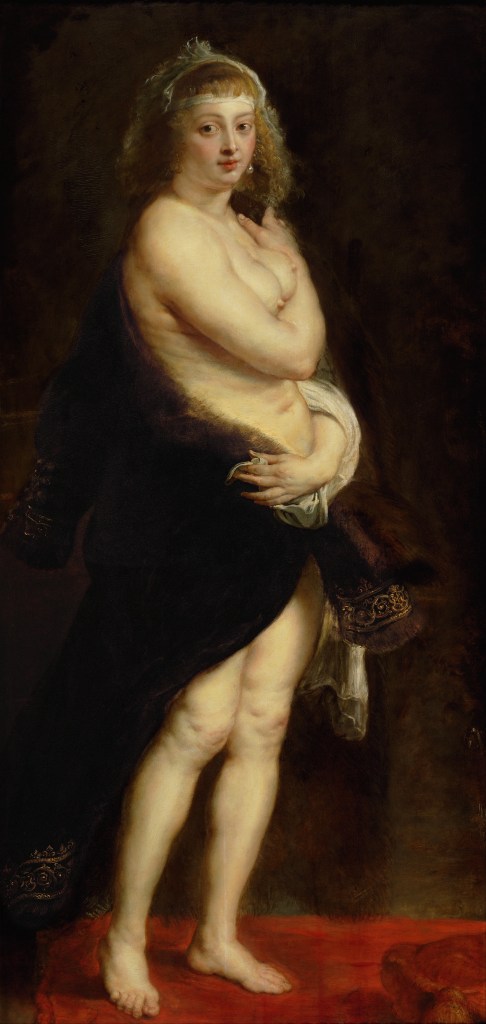
Imperfections are the essence of a body. Even a master like Rubens desired to depict his wife Helena in her natural form, with all of her folds and roundness of the flesh.
She is sheepishly hiding her body as she stares at us, lost in countless of unknown thoughts. She cradles the fur in a comforting hug, heedless of the exposed breast from which the small nipples protrude. She is well aware that she is being watched by millions of people, both calculating and intrigued. Her expression shows the anxiety and ecstasy of being caught in a passionate desire, in unfamiliar arms, warm and strong…at the same time she is begging mercy, she wishes surrender coming back behind the canvas where the world fades.


Het Pelsken (literally The Fur or The Pelt) is a 1638 portrait by Peter Paul Rubens – Kunsthistorisches Museum Wien


Rubens aimed to demonstrate to the masses the essence of femininity, nothing voluptuous or seductive. This figure is shown in all of its intensity, poised on a scarlet fabric where the earth groans beneath the weight of nature reborn.

A white clean fabric is encircling her bare body like a delicate gent caress around her hips beneath that black fur. Is she really encouraging any of you to violate her loyalty in front of her spouse by doing so? Once in Vienna, embrace this painting and listen to its metaphysical speech; you will be dragged into her realm, where you may see the two’s genuine secret love.

We don’t need… Fontana’s sliced paintings or Pollock’s deep-diving into/on and beyond the canvas, the colors… to sense separation from the picture’s stillness – immobility. We can feel Helena’s presence, her puckish-sweet memory, just by looking into her eyes.

“Venus in Furs has caught his soul in the red snares of hair. He will paint her, and go mad.” L.S.M.

Helena Fourment, between 1630 and 1632 – oil on canvas

Standard