Philosophy

Phenomenology of the Refractory Period: Unveiling the Complexity of Intimacy

A Philosophical Inquiry into the Interplay of Desire, Emotional Bonds, and Human Connection

(revised and enriched)

In the intricate realm of human intimacy, the refractory period—traditionally seen as a mere physiological cooldown after orgasm—emerges as a profound signifier of emotional connection, often overlooked in discussions of desire. During this period, men experience a temporary decline in sexual desire towards their partners, sparking a captivating question: Could this brief, physiological hiatus truly serve as a litmus test for genuine affection between two individuals?

Taking a phenomenological approach to this inquiry, we gain a deeper perspective that invites us to see love and desire not as isolated phenomena but as intertwined experiences. Phenomenology, with its emphasis on subjective experience, challenges us to move beyond viewing the refractory period as simply a biological function. Instead, it calls us to recognize it as a lived moment that carries significant meaning within the context of human relationships.

The refractory period, when considered through this lens, becomes more than just a physical pause; it transforms into a reflective space—a moment where partners can explore the ebb and flow of their connection. In this space, desire momentarily wanes, offering an opportunity to reflect on the emotional intimacy that exists beneath the surface. It is here, in the pause, that the subjective worlds of each partner can come into sharper focus, encouraging deeper exploration of how emotional closeness unfolds within the unique context of their relationship.

This phenomenological perspective challenges societal norms that often prioritize the intensity of initial physical passion over the enduring strength of emotional connection. The refractory period, far from being merely a biological occurrence, becomes a shared, lived experience—one that invites partners to be more attuned to each other’s subjectivity and emotional needs. Through this lens, the seemingly simple moment of sexual desire fading after orgasm reveals itself as a space rich with meaning, a space where love, vulnerability, and intimacy can deepen.

We are prompted to ask: Does this post-orgasmic dip in desire offer an opportunity to better understand one another’s inner worlds? Could this pause in passion reveal a deeper, more profound emotional bond, one that transcends the transient nature of physical pleasure?

Moreover, this perspective encourages us to reflect on our expectations of love and relationships. Could a deeper recognition of the subtleties of the refractory period enhance our ability to foster more meaningful, intersubjective connections? By examining this moment through a phenomenological lens, we begin to challenge narrow views of love and intimacy, embracing a more holistic understanding that values both the fleeting nature of physical desire and the enduring emotional bonds that underpin lasting affection.

Ultimately, the rhythmic cadence of the refractory period offers us a rich, phenomenological tapestry of love that goes beyond the physical. It urges us to attune not only to the whisper of our bodies but also to the unspoken emotions and desires that dance between two people. In doing so, we may discover that the refractory period is not just a physiological phenomenon, but a profound reflection of the depth and authenticity of our human connections—an invitation to explore the complex, intertwined nature of love and desire.

Gianfranco Palmieri, 11/2023
Standard
Art, Filosofia, Philosophy, Psicologia, Psychology

Mas-turbation VS Coit-uS

Even in a century when there aren’t enough restrictions, where the adored super-io appears to be turning into a mere puppet in the hands-on ignorance, there are things that are kept secret.

The idea of masturbation as a substitute for sex, and specifically the function of the (sex) toy as a substitute for human presence, is one of the subjects I wish to cover in this essay.

Most people define sexuality as desire, and this is simply understood as coitus.
In reality, sexuality merely refers to a concept.
When we talk about “sex,” we relate to a story that spans generations and involves scientists and medical professionals standardizing humankind’s perception of pleasure.

To put it simply, desire is you.

Generalizing a little, people obtain pleasure by projecting desire through and through bodies, but they also experience desire through mutual manipulation, stimulation, and, in rare instances, euphoric multi-senses connections with other people.

Even the most intense sensory experience is turned to an object in the capitalistic interpretation of desire.
This circumstance played a role in muddying the idea of masturbation as an alternative to coitus.

Coming back to our days, it is interesting how the sex toy is taking over the mere body presence of the others. The strongest pleasure experienced during toy masturbation (because of the high technology behind the sex item) is obscuring the need for the presence.
It is well known that people used a variety of mechanisms, circumstances, and even toys to enjoy their pleasure in earlier centuries. However, eroticism, also known as “masturbation,” was not merely a result of pleasure or a sublimation of the wild instinct for copulation; rather, it was an experience without boundaries or associated psychosis.

What do we lack in this case?

No miss exists. This is the reality of today, created by non-presence connections and high-tech sensory experiences that are constantly getting closer to the real world.
Maybe there is only one thing we are sorely missing: the consciousness or “self.”
It makes no difference if you use a body-attached vagina, a penis, or a plastic toy.
Even those could simply be a “toy.”
The understanding of who we are as beings is what is missing.
We can perceive the selves of others in complete harmony if the self is completely aware of itself in space and time.

Self-awareness and the multi-senses experience are closely related.

Consider the following scenario: a woman/man purchases a toy capable of not just stimulating the vagina-clitoris-penis but also “simulating” in ways never before experienced (humans to humans).
The senses, warm feelings, natural smoothness, scent, taste, and “mutual agreements” are all lacking.
Yes, when two or more selves come together, they can form their own experience.

Technology emerges in the absence of conscience.
Masturbation is the sublimation of coitus in the absence of self-consciousness not multi-sensory-self-referential-experience.

It is clear that self-gratification by an external “being that is not self” (ontological difference?) is not reducible to a simple pleasure, but rather to a variety of dynamics embedded in our cultural order.
This so-called object is the new expression of perfection.
As a result, the human body is turned into a commodity, commodifying itself for the sake of the moment.
At that very time, the Self is fulfilled by the deep breath, the heart rate, and the veracious flux of dopamine.

Neither the object nor the act (known as masturbation) can replace the coitus.
Perhaps what “we” experienced was genuine love that we couldn’t find with others.

There is no connection between self-pleasure and shared-feral-titillating coitus.
The two experiences are two distinct realms that should not be combined or undervalued in comparison to the sacred-that-isn’t coitus.

Finally, the plastic toy cannot replace human flesh, just as self-hypnotic-titillation cannot substitute human genital exercise.
The joyful experience is a one-of-a-kind way to become aware of oneself and the world around us.

For further elucubrations:


Standard
Art, Filosofia, Philosophy, Psychology

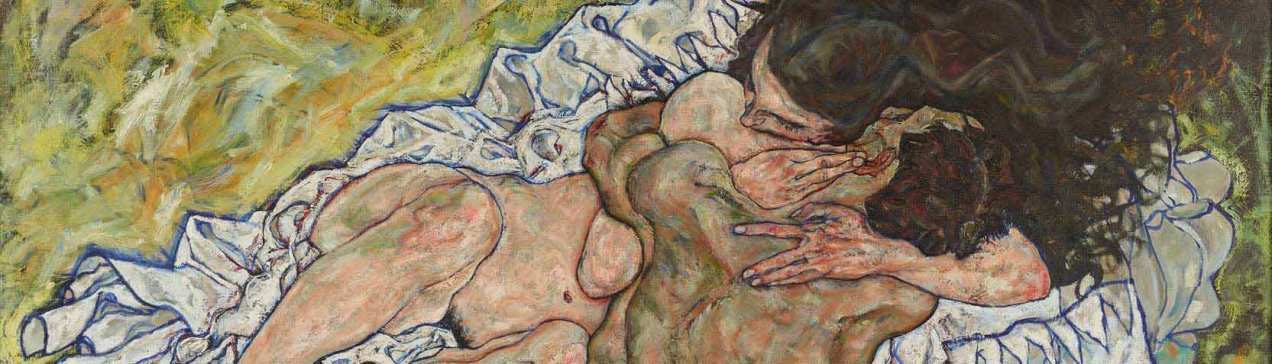
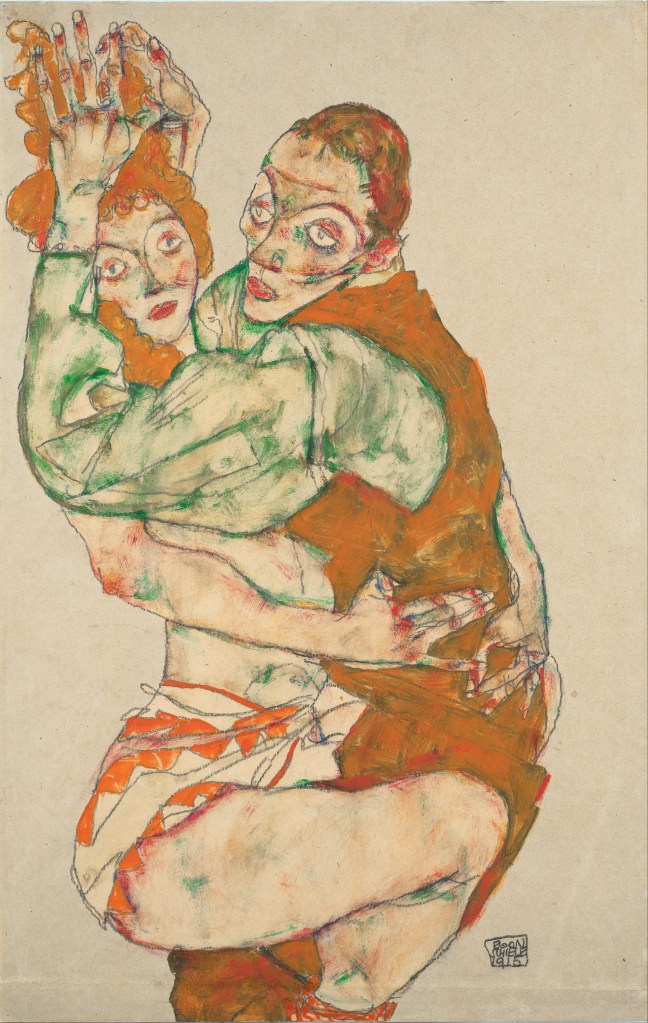
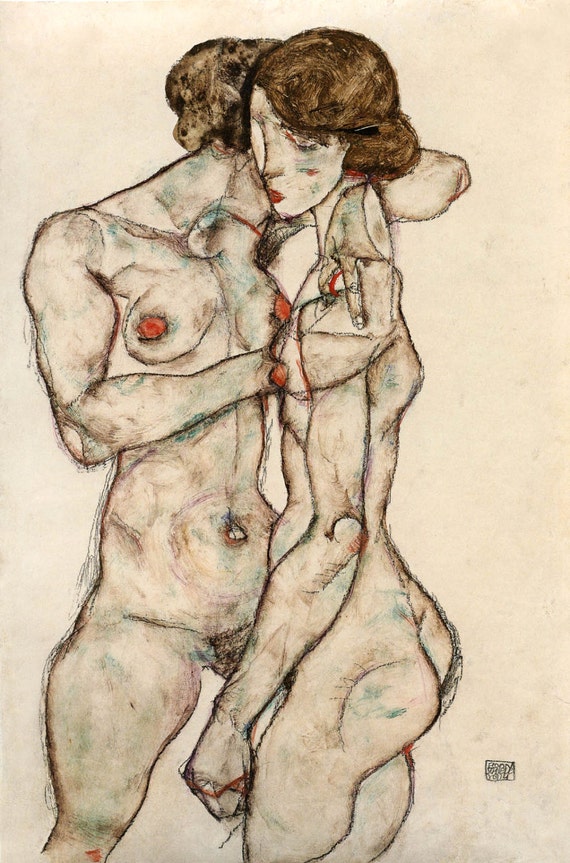
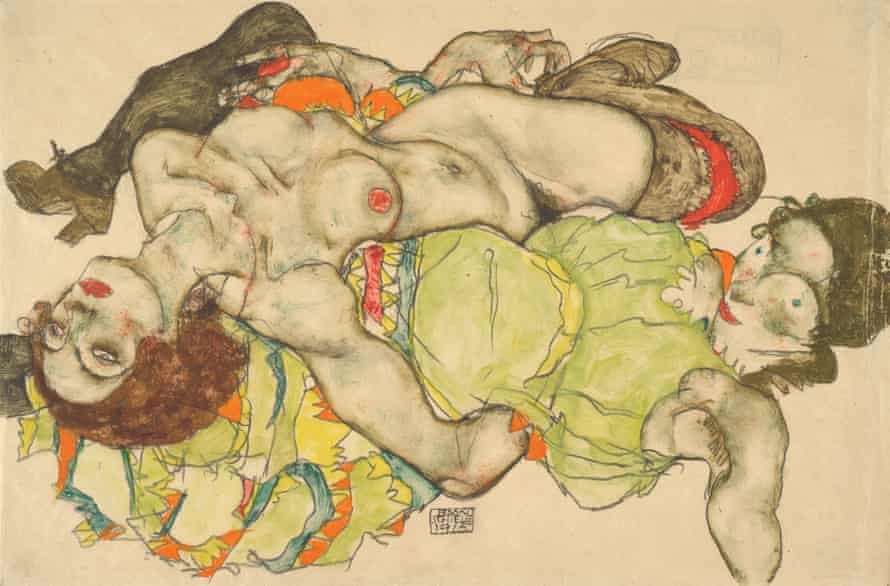
Love beyond the mere concept of affection. Brief rumination on the concept of desire – Feat. E. Schiele

Premise

Desire is the key concept of this article, so, no apologies for the repetition!

Meditation I – Sturm und Drang

I

The fact that I am here, right now, and the object that is my body, are two things that mysteriously stand out in every representation of the (my/ours) reality.
I’ve always thought that my presence in the cosmos is just a fact that I’m aware of., and that my relation to others—or, better, to objects—is wholly subjective.

During those ruminations, I used to connect the dots between my existence and the pasts of other beings in outer space who weren’t me, perceiving the present that belonged to me and sensing the present that belonged to my conscience. In those moments, I came to acknowledge the fact that I was a living being—a melancholy object—and that I was nevertheless alive.
Two distinct experiences between things and beings. Every encounter with those beings is solely motivated by misery and despair. Being among objects was a constant source of conflict, a struggle for reproduction, whereas being among beings was a symbol of simple mortality, here and now, the icy touch of the pure non-being.

Desire – the lonely sing of the desperation

I

(for not using the pronoun “us”) desire due to an innate need for reproduction. I had always assumed that desiring was merely a trait unique to humans, but after the experiences that followed, I understood that I was just a mammal.
The idea of love serves to tame the wild, unbridled yearning.
At the same time, I’ve discovered that love is an intriguing experience since it reveals both our human nature and our remote connection to wild nature.


Humans are capable of abstract thought and concept creation, so we invented the idea of love to stifle our irrational need. The sincere desire to help and assist one another, which is typical of many species on this planet, is also represented by love. As a result, we share this wonderful idea with all living things.
By referring specifically to this succinct justification, I acknowledge that my origin and the struggle are essentially mine as a human being.

The paranoid impulse

W

e have seen how desire and love are not completely compatible. We desire because of instinct, not because of love. Any attractions to the other individuals are what I consider as desire.
Our lives are largely driven by our desires. Every interaction we have is subconsciously influenced by the primal filthy desire. This is merely a thought about the essence of our being, not a pessimistic view of life or the world. Humans have the capacity to experience suffering without becoming affected by it, yet we are aware that we are caught in the instinctive black circle even beneath the heavy conscience.


I won’t write much more about it; instead, I’ll just allow you some time and space to consider your current circumstances in relation to those of your fellow humans and other living things.

The paramount conflict

In every connection/relationship we can see a latent conflict. I don’t mean that our lives are based on conflict because we live among people, but since we are part of nature, the answer is obvious, implicit.
How can we get out of this situation? Of course, for many people, that is not an issue; their lives are filled with love and happiness; but what about your inner being? How can we become actual humans in the face of our wild impulses and habits? Nature, instinct, and untamed habits are not inherently bad; rather, they are obstacles to the happiness of certain individuals who are unable to overcome that fundamental and embedded dimension.

By mastering our instincts, we can become successful and fulfilled owners of ourselves.
This is/was merely a meditative exercise. The solution is to go out and figure it out for yourself.

Postface

I was still blind, but twinkling stars did dance Throughout my being’s limitless expanse, Nothing had yet drawn close, only at distant stages I found myself, a mere suggestion sensed in past and future ages.
Novalis

Standard
Art

The “now” unfolded #Anguish in becoming#

Never confuse the present with presence. We believed we were holding it in our grasp when we suddenly lost it. It’s slimy and cryptic. It is in our tendency to assume that living in the present is a certain thing, but it isn’t: when you say the word “now,” it is already gone, gone in the same way that the word “gone” is gone. Perhaps life follows the gone-departure, leaving the moment to eternity. Our present is mainly composed of our memories, which are stored in our soul, organized by the spirits, and summoned by God whenever they’re needed. Merely thinking about memories allows us to relive the past, which is no longer present.

After centuries of defeats and failures, we still believe we are unbeatable. The “we” that refused its nature, who denied the thought of being born in a filthy cradle and, eventually, filled of regrets, the ES which lost its track wanders in the never-ending nothing.

It has the ability to raise during its bleak existence. This power is not granted to everyone, but only to those who can grasp it. Everyone could catch it, although not everyone is capable of doing so. God bestowed free will upon us. Nothing exists apart from the mass; to it are due all the powers of which God is the ultimate expression. Instead, the “primitive” aspect of humanity is depicted by the mass.

Sebastian Münster, (1544)

The word is confusion. Dizziness and giddiness, as well as dizzy spells. These disorders provide the primary insight into this gloomy state of loneliness among the throng, where each indicates a distinctive quality:

  1. Dizziness: IT grasps the concept, experiences its existence in the present, and realizes it has entered the world of spirits. The head begins to whirl around and sinks deep into space, into its consciousness. Pain and anguish force IT to become aware of itself.
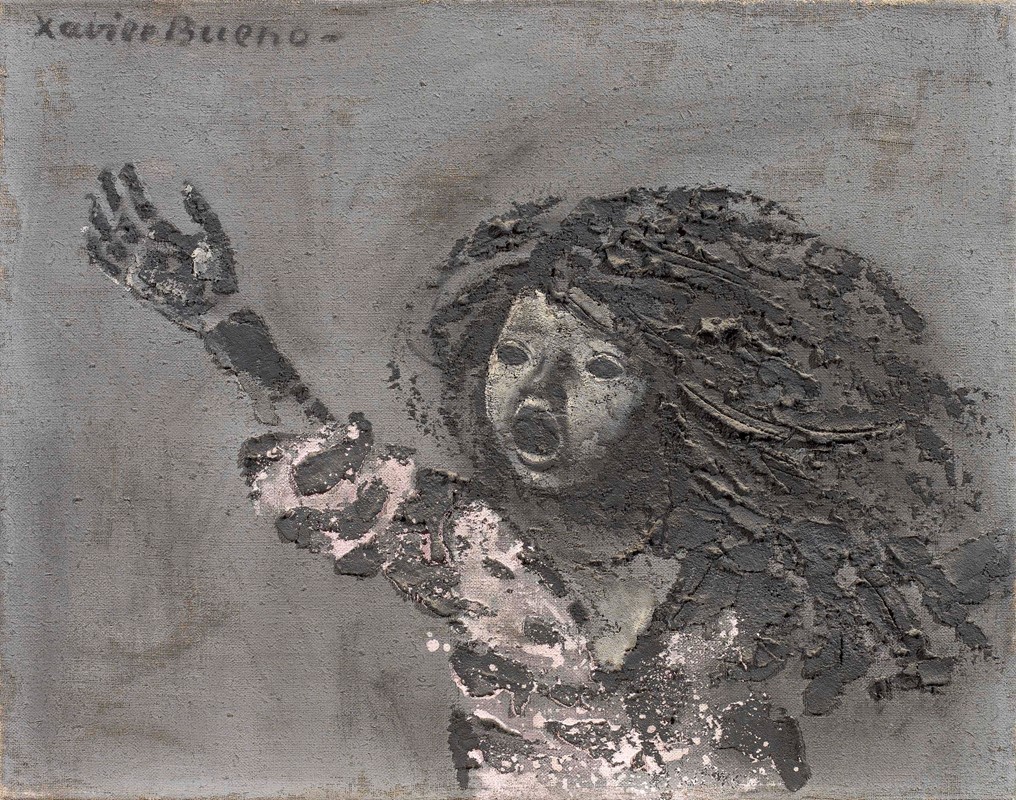
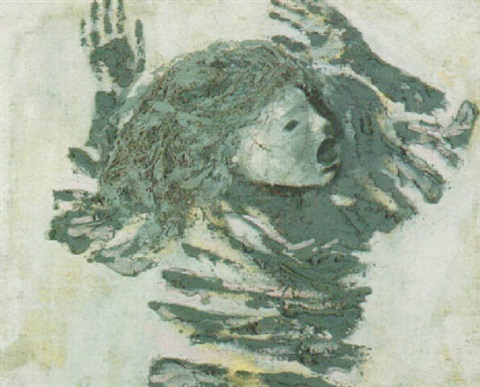
Xavier Bueno, 1965

Giddiness: ITS heart suddenly begins to beat quicker, implying that everything is fine, despite the fact that something behind the consciousness is working hard to destabilize the reality inside and around IT. There are no alternatives: IT is alone, and by enduring IT experiments its place in the world (society). The metaphysical presence of IT among the many is utterly devastating: the spiritual essence of the few is lost in the midst of nothingness.

Xavier Bueno

3. Nausea?

The unfolding of pain awakens the presence of the present.

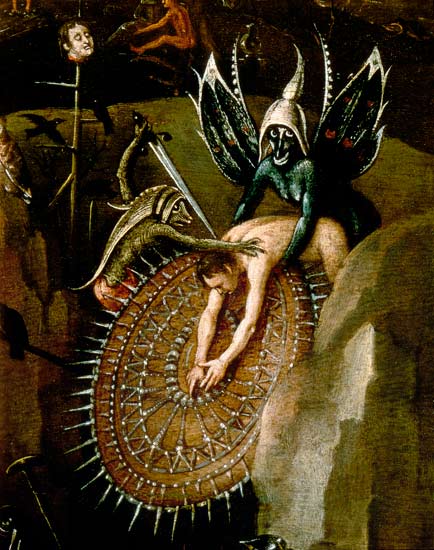
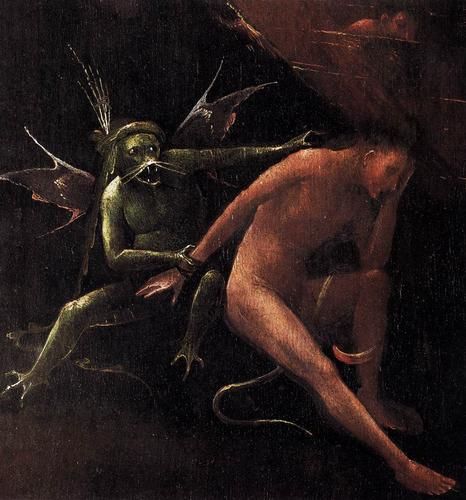
Hieronymus Bosch
Standard