The sun heats my skin, yet my illuminated head spins quickly. I’d want to see the moon against the gloomy backdrop of my dreams. There were no starts, only the moon, high in the sky, alone and lonely.
I try to walk, but my feet are stuck in place. I am not moving. is there a movement within me? Blood, heartbeats and thoughts. My tongue is tingling, my mouth is dry and my mind is racing.
I can feel parts of my body pounding like volcanoes covered up and ready to explode
D E S O L A T I O N
Nobody inside, my soul is speaking to me. What exactly am I? Yes, I am gazing at myself right now. I am touching these hands and arms, but I am not feeling myself. Great boulders, I raise my arms, yet my hands are empty
D E L I R I U M
Every step forward, one idea returns to the beginning. I want to be little, heedless of myself and the world around me. I see myself in everything, and everyone is staring at me as I stumble aimlessly
Where am I?
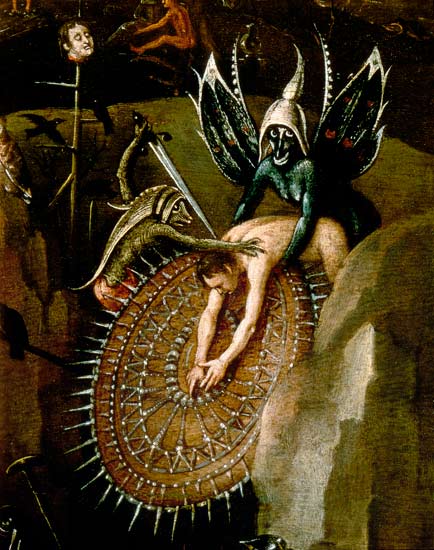
All those faces, all those eyes staring at me… I am an insect paralyzed on a glue-covered floor.
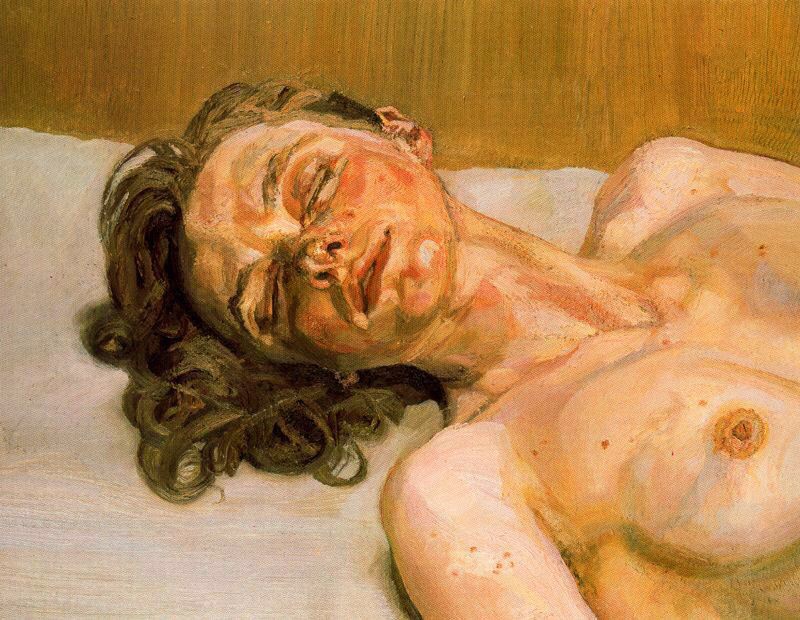
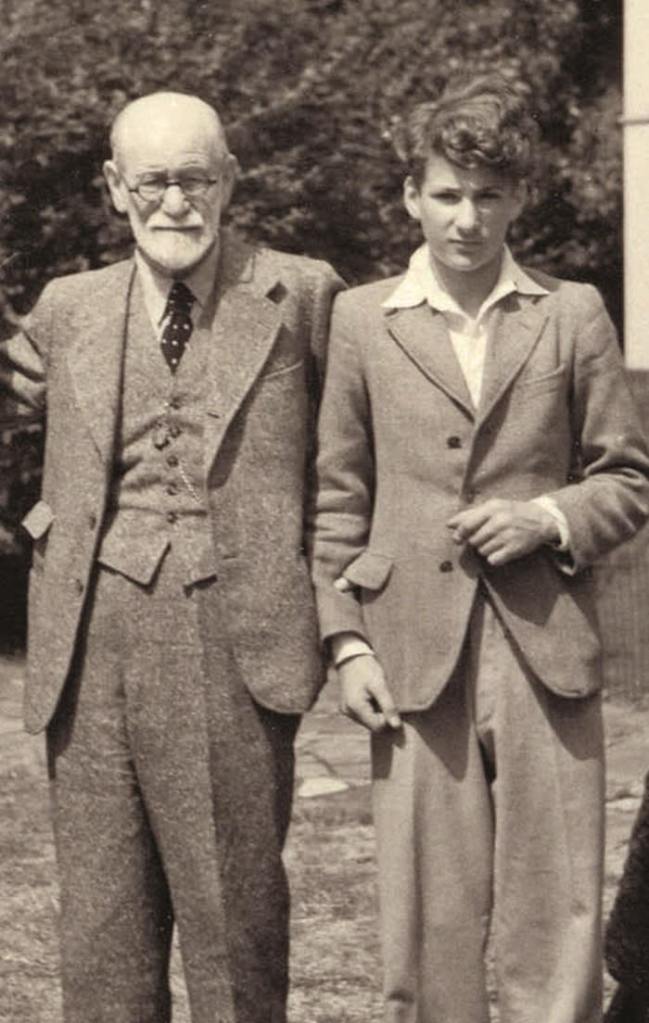
The one who was able to understand the human soul was Freud, the man of the true desires, of the unwavering impulses. Not a spooky, unstable man (his grandfather, the neurologist) who was shamelessly servile to bourgeois power, but a straightforward master, a modest intellectual who appealed to the masses by mostly showing naked people.
In his intense sensuality and reality, Lucian is violent; in his honesty and boldness, he is pornographic; and in his upbeat exaltation of life through the terrible message of the static-natural-raw body, he is prurient. The primary science of the spirits is art, in which power and cruelty are subtracted from human knowledge. Where the synthesis is the art, Freud represents the polar opposite of his namesake and is essentially unknown to Dr. S.
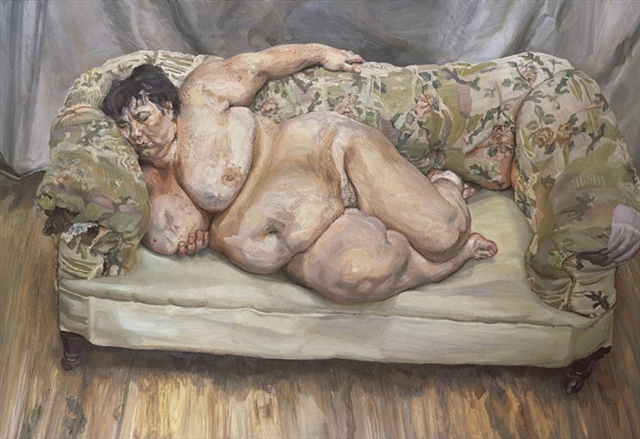
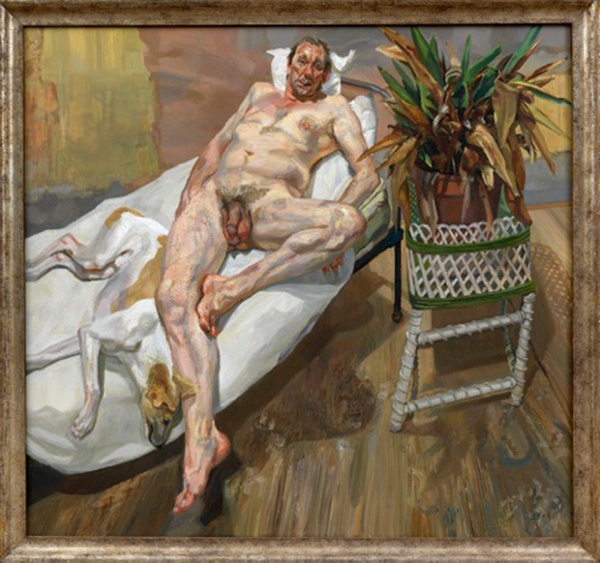
Benefits Supervisor Sleeping is, 1995, oil on canvas
Die Tiere, die wir sind
The relationship between people and animals is essential in Freud’s painting. It is simple to feel the nature of the flesh, the fragrance of the body, and its sex moisture by gazing at his portraits. The only plausible and possible method of human comprehension is through Freud’s interest in considering people like animals.
In “David and Eli,” this bond is strong. Mother Nature has established a bond of love and profound connection between the two. Both nude, free, and at peace, living in the present entirely calm; free of the crowds’ angry hypocrisy and profound malice.
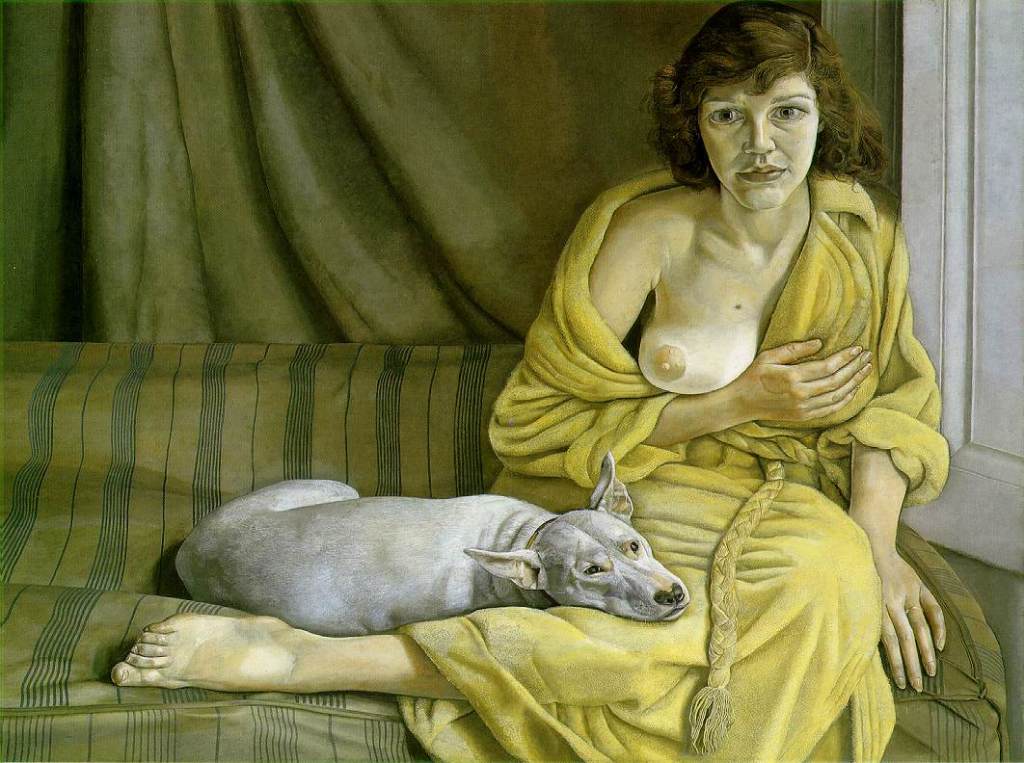
In “Girl with a White Dog,” the lady’s sensuality, nearly pure, humiliated, like a nun unveiled, matches her friend’s drowsy softness, lying down on her legs. This is the unity we like, the one Lucian envisioned.
David and Eli‘, Lucian Freud, 2004 – Girl with a White Dog 1952
The Two Freud – A Reconciliation?
I don’t perceive any relationship between S. and L. Freud. Even the stances of his models do not convey the impression of a psychoanalytic session to me. The sitters on such sofas are not judged, but they are allowed to communicate their profound thoughts and wishes for their own reasons. His grandfather’s conscious or unconscious impact is purely negative, a subconscious desire and urge to oppose the culture of suppression and mental manipulation.
Ultimately, the true meaning of his artwork is concealed in his mind-heart, and it is now resting eternally in a better place, where the art is unspoiled. What matters is what you see whenever you watch his works and how you feel while you contemplate these masterpieces. It is a type of psychoanalytic process in which the psychoanalyst is the viewer himself, the only one capable of retrieving its suffocated desires, blockers, and dreams suffocated under a thousand lies and coercion; not being led into the obscure unconscious dynamics by an external source, but thanks to the natural force that moves life itself. I’m not meant to tell you what this energy is; you probably know, feel it, or you have never pondered it. It’s time to delve within yourself, ideally at a museum with your-our past.
“I prefer the company of animals more than the company of humans. Certainly, a wild animal is cruel. But to be merciless is the privilege of civilized humans.”
Never confuse the present with presence. We believed we were holding it in our grasp when we suddenly lost it. It’s slimy and cryptic. It is in our tendency to assume that living in the present is a certain thing, but it isn’t: when you say the word “now,” it is already gone, gone in the same way that the word “gone” is gone. Perhaps life follows the gone-departure, leaving the moment to eternity. Our present is mainly composed of our memories, which are stored in our soul, organized by the spirits, and summoned by God whenever they’re needed. Merely thinking about memories allows us to relive the past, which is no longer present.
After centuries of defeats and failures, we still believe we are unbeatable. The “we” that refused its nature, who denied the thought of being born in a filthy cradle and, eventually, filled of regrets, the ES which lost its track wanders in the never-ending nothing.
It has the ability to raise during its bleak existence. This power is not granted to everyone, but only to those who can grasp it. Everyone could catch it, although not everyone is capable of doing so. God bestowed free will upon us. Nothing exists apart from the mass; to it are due all the powers of which God is the ultimate expression. Instead, the “primitive” aspect of humanity is depicted by the mass.
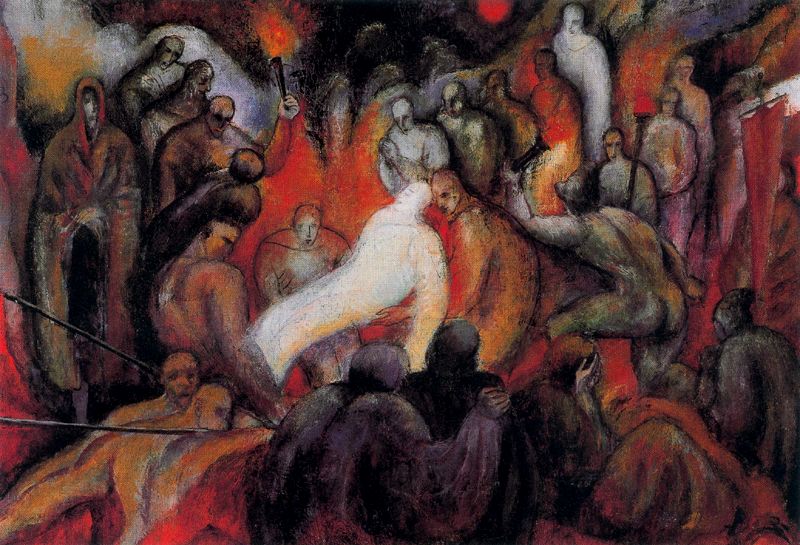
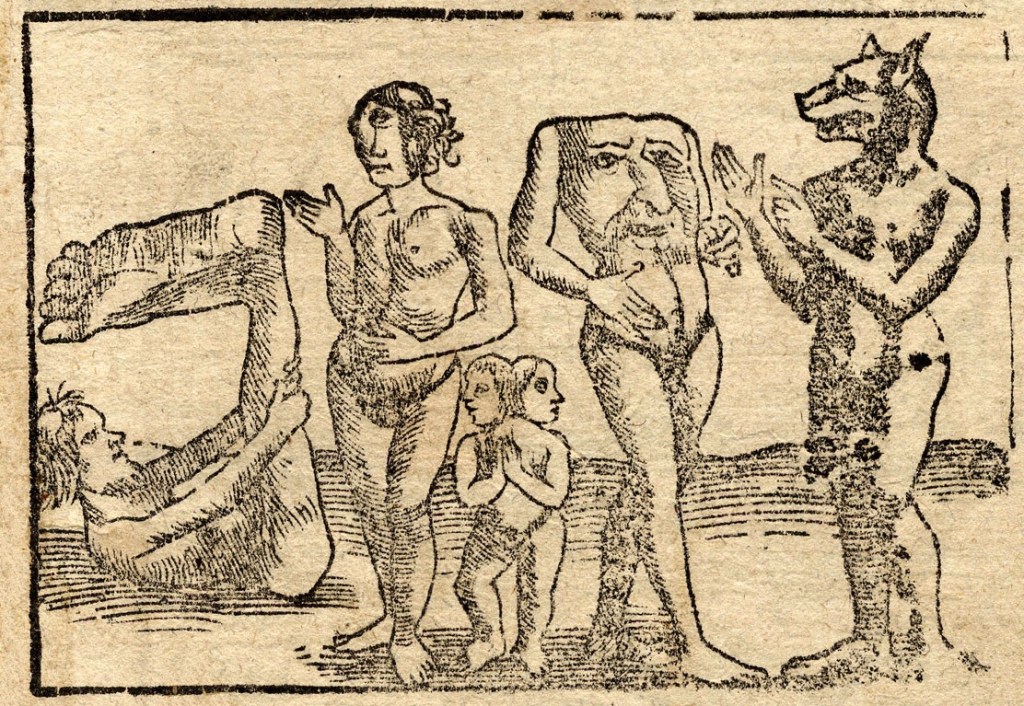
Sebastian Münster, (1544)
The word is confusion. Dizziness and giddiness, as well as dizzy spells. These disorders provide the primary insight into this gloomy state of loneliness among the throng, where each indicates a distinctive quality:
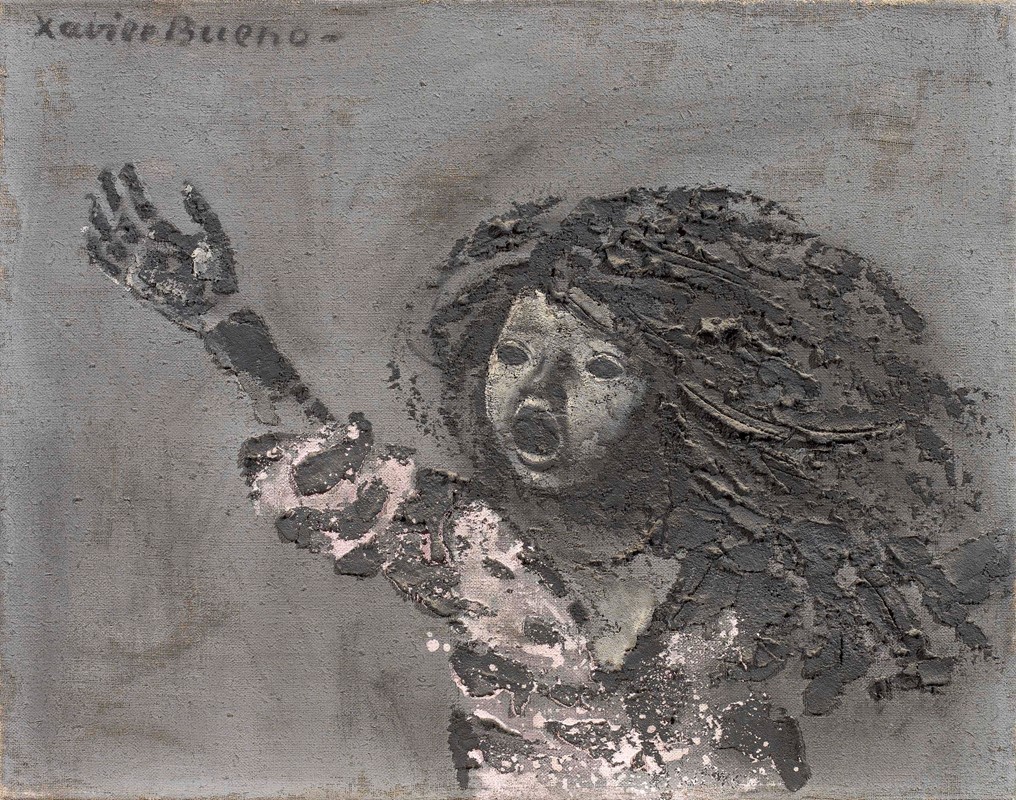
Dizziness: IT grasps the concept, experiences its existence in the present, and realizes it has entered the world of spirits. The head begins to whirl around and sinks deep into space, into its consciousness. Pain and anguish force IT to become aware of itself.
Xavier Bueno, 1965
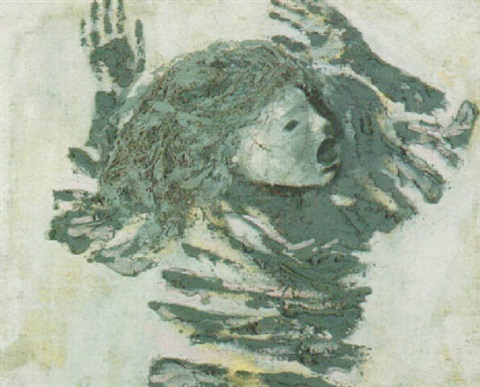
Giddiness: ITS heart suddenly begins to beat quicker, implying that everything is fine, despite the fact that something behind the consciousness is working hard to destabilize the reality inside and around IT. There are no alternatives: IT is alone, and by enduring IT experiments its place in the world (society). The metaphysical presence of IT among the many is utterly devastating: the spiritual essence of the few is lost in the midst of nothingness.
Xavier Bueno
3. Nausea?
The unfolding of pain awakens the presence of the present.
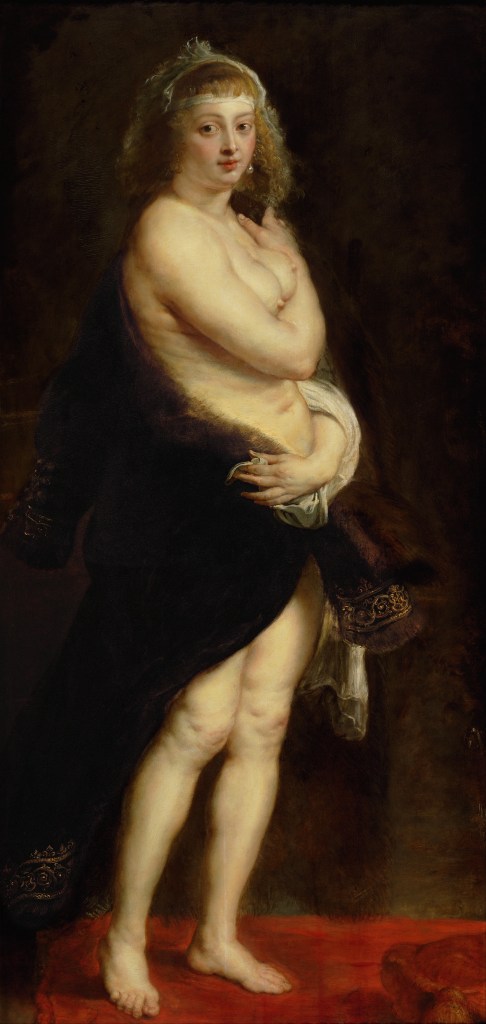
Imperfections are the essence of a body. Even a master like Rubens desired to depict his wife Helena in her natural form, with all of her folds and roundness of the flesh. She is sheepishly hiding her body as she stares at us, lost in countless of unknown thoughts. She cradles the fur in a comforting hug, heedless of the exposed breast from which the small nipples protrude. She is well aware that she is being watched by millions of people, both calculating and intrigued. Her expression shows the anxiety and ecstasy of being caught in a passionate desire, in unfamiliar arms, warm and strong…at the same time she is begging mercy, she wishes surrender coming back behind the canvas where the world fades.
Het Pelsken (literally The Fur or The Pelt) is a 1638 portrait by Peter Paul Rubens – Kunsthistorisches Museum Wien
Rubens aimed to demonstrate to the masses the essence of femininity, nothing voluptuous or seductive. This figure is shown in all of its intensity, poised on a scarlet fabric where the earth groans beneath the weight of nature reborn.
A white clean fabric is encircling her bare body like a delicate gent caress around her hips beneath that black fur. Is she really encouraging any of you to violate her loyalty in front of her spouse by doing so? Once in Vienna, embrace this painting and listen to its metaphysical speech; you will be dragged into her realm, where you may see the two’s genuine secret love.
We don’t need… Fontana’s sliced paintings or Pollock’s deep-diving into/on and beyond the canvas, the colors… to sense separation from the picture’s stillness – immobility. We can feel Helena’s presence, her puckish-sweet memory, just by looking into her eyes.
“Venus in Furs has caught his soul in the red snares of hair. He will paint her, and go mad.” L.S.M.
Helena Fourment, between 1630 and 1632 – oil on canvas



 Palmieri’s Diary